A new onshore well was drilled in a sandstone reservoir with a heterogeneous formation and interbedded shale layers. The application involved heavy oil with a gravity of 20° API, and the reservoir exhibited horizontal permeability between 100–400 mD along a 400 m / 1,300 ft open-hole section. Offset wells produce around 100 BPD initially but decline rapidly, prompting the operator to seek a more effective completion soluition.
The well was completed with a 4½” liner incorporating five Fishbones Drilling subs, creating a total of 15 branches that extended into the layered sandstone formation. Two additional subs without needles were installed near the heel to provide extra inflow ports, improving overall drawdown distribution along the wellbore.
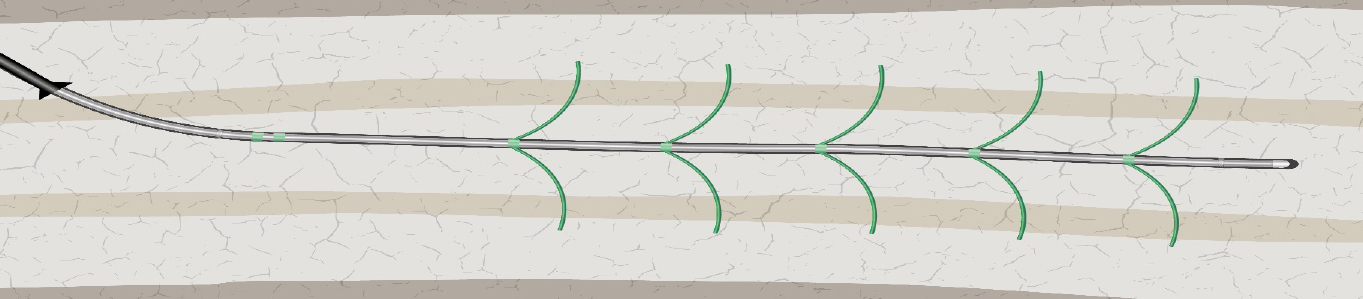
Production multiplied compared to offsets
After completion, the well delivered a production rate of 600 BPD, representing a multiple of the offset wells and confirming the benefit of the Fishbones Drilling branches in the heavy oil sandstone.
Sustained high production
High production rates were maintained for more than six months, in clear contrast to the rapid decline observed in offset wells, demonstrating improved reservoir drainage and more efficient recovery.
Basis for further development
The strong performance led the operator to issue a purchase order for additional wells in the same field, positioning Fishbones Drilling as a central technology for future development of the heavy oil reservoir.
Discuss your field challenges

Explore more case studies
Discover how Fishbones technology delivers increased production, improved recovery, and efficient reservoir development across different field conditions and applications worldwide.
Case
Type
Year