Increasing production in a challenging basement reservoir
A large field development targeted a fractured gneiss basement formation through a near-vertical well with a 21° inclination. The well was drilled to a total vertical depth of 4,900 m / 16,076 ft under demanding downhole conditions of 168°C / 335°F and 472 bar / 6,844 psi.
The operator's objective was to significantly increase gas condensate production while ensuring reliable performance in one of the field's most technically challenging environments.
Branching technology for fractured formations
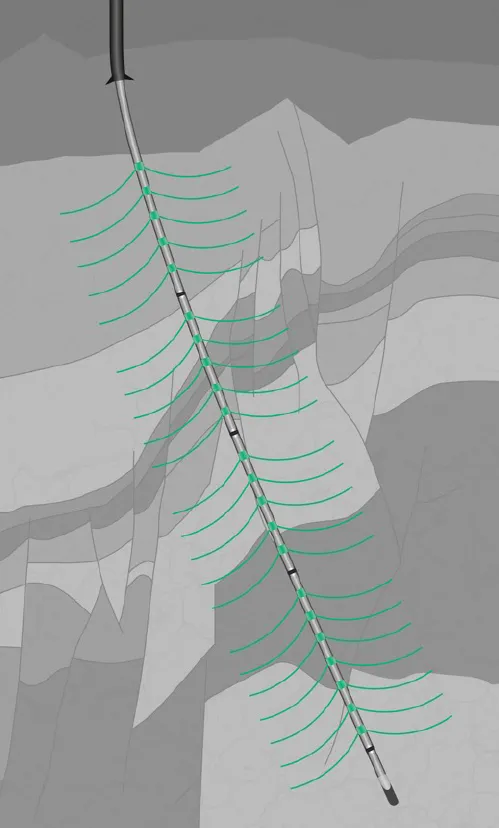
Fishbones deployed a 4½” liner equipped with 22 Fishbones Drilling Subs, creating a total of 66 branches across a 430 m / 1,410 ft open-hole section.
The laterals were drilled with approximately five hours of circulation time, providing increased access to the fractured reservoir network and maximizing contact with productive zones.
Three times higher than expected
The well achieved production of 2,400 BOEPD compared to expected rates of 800 BOEPD, significantly outperforming initial forecasts.
Sustained production performance
The well maintained higher production rates over time compared to peer wells in the field, demonstrating the long-term value of increased reservoir access.
Expanding field deployment
Following the successful results, the operator initiated planning for the next Fishbones installation, executed in Q1 2026.
Discuss your field challenges

Explore more case studies
Discover how Fishbones technology delivers increased production, improved recovery, and efficient reservoir development across different field conditions and applications worldwide.
Case
Type
Year